
Quick Answer
Yes. Epoxy resin systems can cause skin irritation, and in some people repeated exposure leads to allergic contact dermatitis. This is true of epoxy as a chemistry, and it is true of our products. We would rather you read that from us than find it out the hard way. Uncured resin, hardener and partially cured material are where the risk sits. Cured resin is a different matter. And the risk is largely controllable: avoid skin contact, use the right gloves, ventilate your space, and let the work cure fully before you sand it. If you react, stop, wash, and get medical advice. The section below tells you exactly what to do without needing anything else to hand.
Epoxy Resin Irritation vs Allergy: What’s the Difference?
The distinction matters, because the two have different causes and different consequences.
Irritant contact dermatitis is direct inflammation of the skin. Given enough of an irritant, it can happen to anyone. It is not an immune response and it is not an allergy.
Allergic contact dermatitis is a delayed hypersensitivity reaction. It only happens after the immune system has become sensitised to a specific substance, and then meets it again.
In practice, a first heavy contact with uncured resin may simply irritate. With repeated unprotected exposure, the immune system can become progressively more reactive to certain components - and once that has happened, much smaller amounts can set off a reaction. That process is called sensitisation, and it is the reason protection matters from your first pour rather than from your first symptom.
The two can look identical on the skin. Only a healthcare professional can tell you which one you have.
What Causes Epoxy Resin Allergic Reactions and Skin Irritation?
Resin, Hardeners and Reactive Diluents
All three can irritate skin or cause allergic contact dermatitis. The epoxy resin component itself is the most important sensitiser in these systems: in a Finnish study of 209 people with occupational contact allergy to epoxy chemicals, 82% reacted to DGEBA-R, the standard bisphenol A epoxy resin. Those were workers with heavy daily exposure — painters, floor layers, tile setters — not hobby makers, so the figure describes how potent the sensitiser is rather than how likely you are to react. Amine hardeners can be potent sensitisers too, as well as directly corrosive to skin. This is why careful measuring, gentle mixing and not splashing matter for your safety and not only for your finish.
Gloves for Epoxy Resin: Why the Right Material Matters
Nitrile is the usual recommendation for epoxy work, and the right glove material and change frequency for a specific product are given in that product’s safety documentation. Replace gloves as soon as they are contaminated or damaged, and do not touch your skin, phone or tools with resin on your gloves. Worth knowing: latex is itself a common allergen, so a reaction that appears while wearing latex gloves may be a reaction to the gloves.

Colourants and additives
Every additive puts another substance into the system. Some pigments and additives are irritants or sensitisers in their own right. Use colourants intended for resin, at the recommended loading, and read the safety information for the additive as well as the resin.
Epoxy Resin Sanding Dust and Skin Exposure
Sanding material that has not fully cured produces dust carrying reactive components. Wait for full cure, keep dust down, use respiratory protection where it is called for, and clean up afterwards.

UV Resin Allergy: Why the Chemistry Matters
Formulations differ. Different base resins, different curing agents, different diluents, different additives. Safety information for one product does not transfer to another, and a reaction to one product tells you nothing reliable about how you will respond to the next.
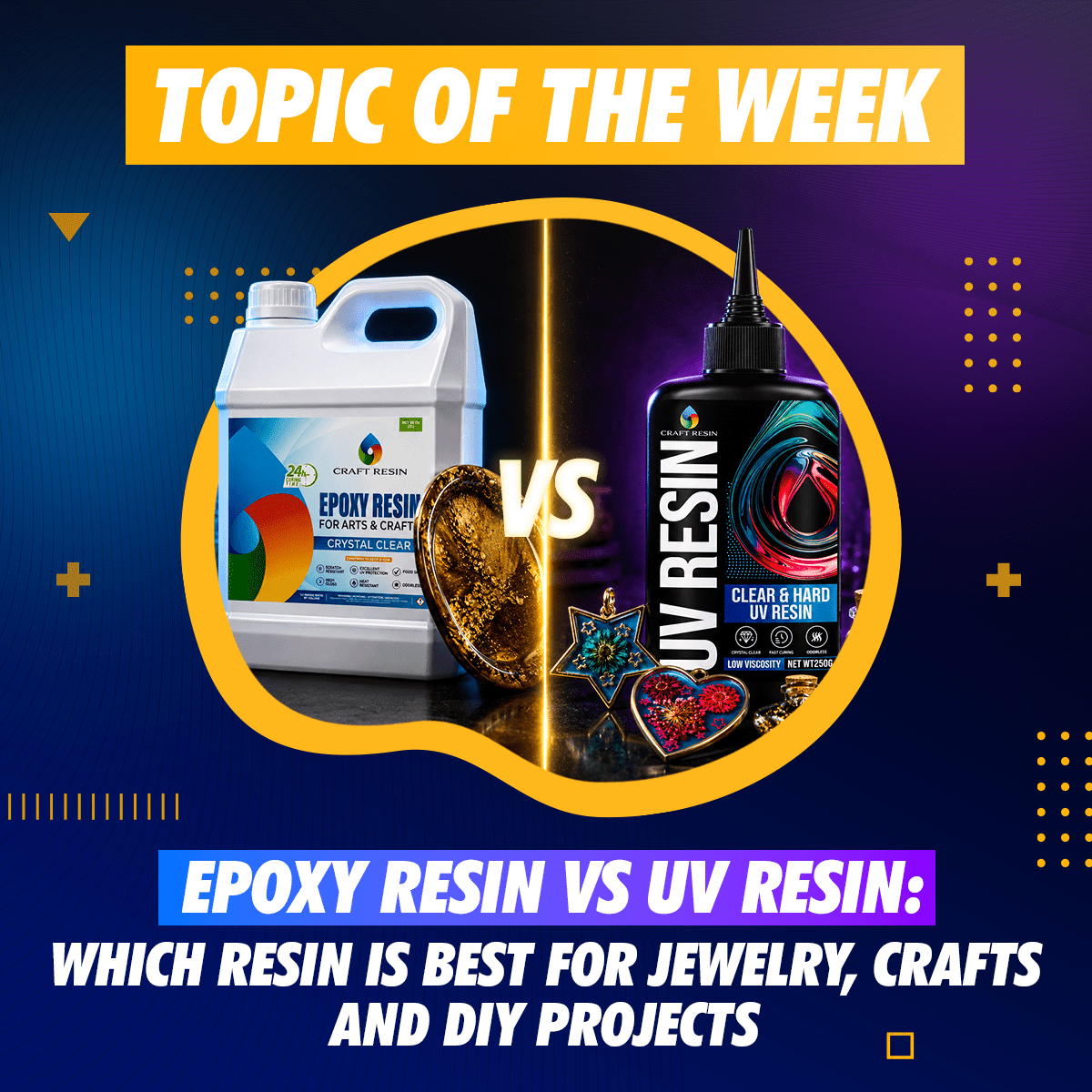
UV-curing resins are the clearest example. They should not be assumed to be chemically equivalent to two-part epoxy systems, and products are sold under names that blur the difference. A 2026 case series in Contact Dermatitis followed three people who developed allergic contact dermatitis while making jewellery as a hobby with products sold as “epoxy UV” resin. All three were shown to be sensitised to (meth)acrylates and not to epoxy. Analysis of the resins found 2-hydroxyethyl methacrylate and an acrylate oligomer - no epoxy at all. The authors call these products “incorrectly labelled” and a hidden source of acrylate sensitisation.
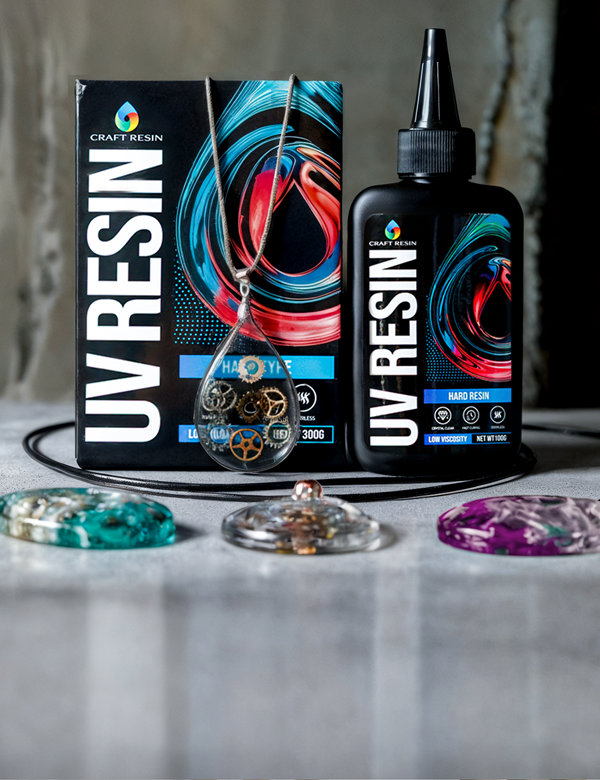
That is a labelling failure, and we took it seriously enough to check ourselves against it. Our own UV product is a methacrylate system, not an epoxy one - so we removed the word “epoxy” from its name across all our stores, because a name that misdescribes the chemistry is a safety problem, not a marketing decision. If you are sensitised to acrylates, that distinction is the difference between a safe purchase and a reaction, and you are entitled to see it on the label.

One Maker’s Experience With UV Resin: Tiffany’s Story
Tiffany of Tiffany’s Wonderous Creations makes handmade jewellery in Staten Island, NY, using UV resin. She contributed her experience for this article. It is one person’s account of working with a product: it is not evidence about anyone else’s risk of reacting, and it does not tell you how you will respond.

discovered my love for UV resin while searching for ways to enrich the quality of my polymer clay jewelry.
Her early experience was severe.
Although I used protective gear, I had a severe allergic reaction to my first product. It was itchy, burning hives that were almost like blisters. My hands, chest, and face experienced the full impact. It got so unbearable that it became an emergency room visit.
We include that because it is the part that matters most. A reaction can be that serious, it can happen despite protective gear, and it can happen on a first product.
Tiffany has been using Craft Resin UV Resin since the beginning of this year as part of her jewellery-making process. What she describes noticing is how it handles:
Far fewer bubbles. The product spread evenly and beautifully over my creations.
She is currently using it to build inventory for the St. Ann’s Comic Con in Staten Island —
hair sticks, poetry pendants, and Halloween keychains.


Follow Tiffany: Instagram | Facebook
Anyone who has had a significant reaction to any resin product should get medical advice before further exposure, whatever product they are considering.
Epoxy Resin Allergy Symptoms
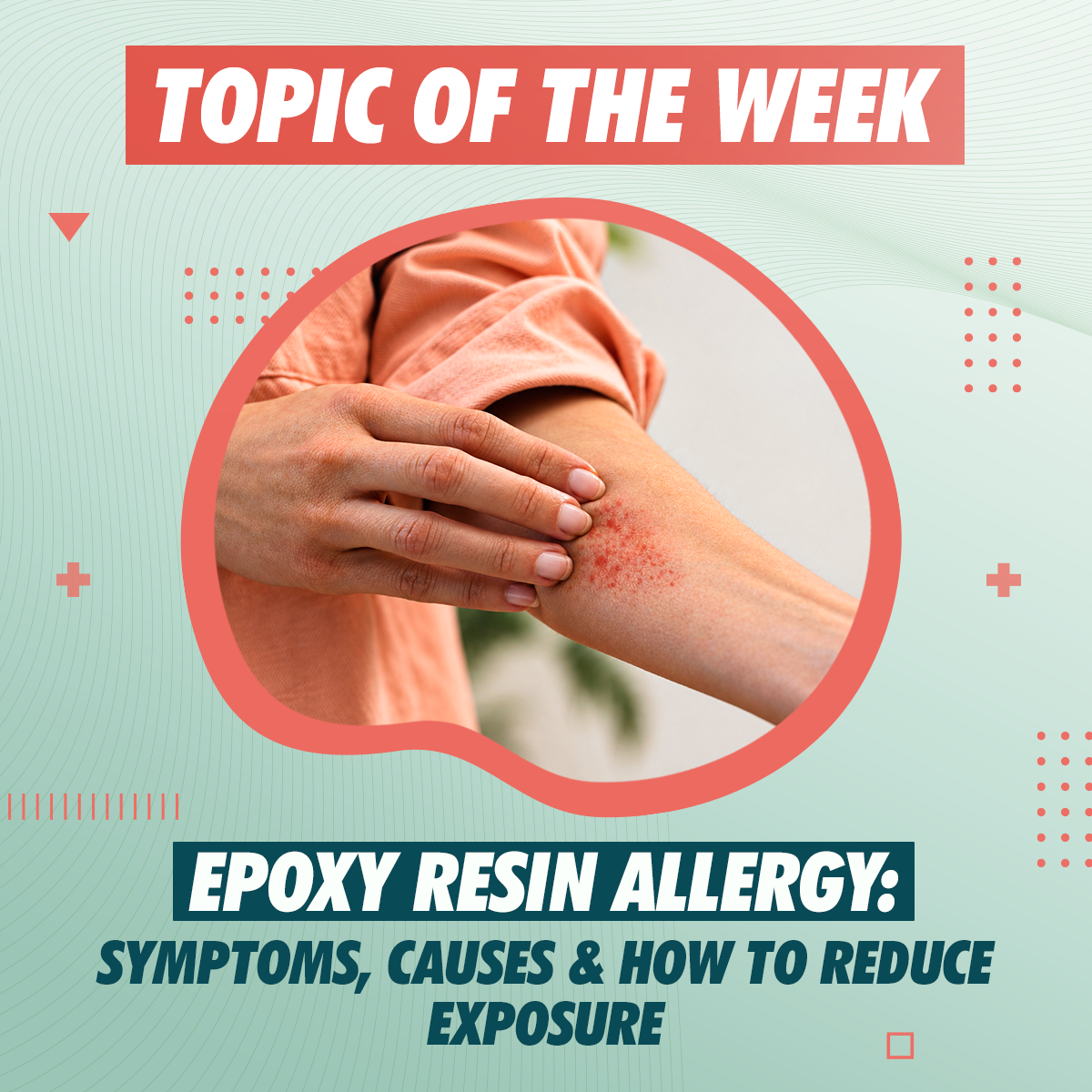
Contact with an uncured epoxy system can produce redness, itching, swelling, burning, dryness and, in more pronounced cases, blistering. Reactions usually appear where exposure is most likely - hands, wrists, forearms, face. They may show up soon after exposure or hours later.

Because irritant and allergic reactions look alike, symptoms alone cannot tell you which you have. Do not use this article to diagnose yourself.
What to Do If You Have a Reaction to Epoxy Resin
You do not need any other document to follow these steps.
- Stop. Put the work down and leave the area.
- Remove contaminated gloves and clothing without dragging them across clean skin.
- Wash the affected skin with soap and plenty of lukewarm water. Do not use solvents on your skin.
- If resin is in your eye, rinse with water for several minutes, holding the eyelid open, and get medical attention.
- Do not go back to the product to see whether it happens again.
- Get medical advice if symptoms persist, worsen, or return whenever you work with resin. Take the product name and label with you - it helps a clinician work out what you were exposed to.
- Seek urgent medical attention for difficulty breathing, significant swelling of the face, mouth or throat, or widespread reaction.
Our safety documentation for the specific product carries the full first-aid detail, and we will send it to you on request. You do not need to wait for it to start the steps above.
Where Craft Resin stands
We make epoxy and UV resin products for makers, and we take the view that you cannot use a product safely if the manufacturer is vague about it. So, plainly:
We do not claim our resins are hypoallergenic, and we do not claim allergic reactions cannot occur. Any manufacturer telling you otherwise about an epoxy system is overreaching. Individual sensitivity varies, and so does exposure.
Safety documentation is available for every product we sell. Email hello@craft-resin.eu with the product name and your country and we will send the current sheet for your market. It covers hazards, handling, protective equipment, storage and first aid.
We test, and we will tell you what the tests say. Two results, for the products named:
| Test | Result |
|---|---|
| Bisphenol A (BPA) — Arts & Crafts, Deep Pour, Table Top resins | Not detected, at a method detection limit of 0.10 mg/kg |
| Volatile organic compounds, to GB 33372-2020 — Arts & Crafts, Deep Pour, Table Top resins | 40 g/kg against a 50 g/kg limit — pass |
| Volatile organic compounds, to GB 33372-2020 — UV resin | 4 g/kg against a 200 g/kg limit |
These are results from tests on samples of the products named, and they say what they say: nothing more. A low VOC result does not mean a product cannot irritate skin or cause sensitisation, and it is not a substitute for the exposure controls on this page.
We correct our own labelling when the chemistry says we should — as we did with the naming of our UV product.
Our guidance does not change by brand. Any uncured resin system, ours included, should be handled with skin contact avoided, proper gloves, ventilation, and full cure before sanding.
The protection checklist

| Measure | Why it matters |
|---|---|
| Nitrile gloves | The usual recommendation for epoxy work; check the safety sheet for the specific product you are using |
| Change gloves regularly | Stops resin building up on the outside of the glove and reaching your skin |
| Safety goggles | Protects the eyes from splashes while mixing and pouring |
| Plastic or silicone apron | Stops resin on clothing transferring to skin later |
| Good ventilation | Reduces airborne exposure while curing and sanding |
| Respiratory protection where required | Reduces inhalation of sanding dust; follow the product guidance |
| Full cure before sanding | Reduces exposure to reactive components in the dust |
| Wash hands and exposed skin after every session | Removes residue that transferred despite gloves |
In short
- Epoxy systems can cause irritant or allergic contact dermatitis. Ours included.
- Repeated exposure can lead to sensitisation, which is why protection starts at your first pour.
- Resin, hardener, diluents and additives can all contribute.
- Fully cured material is generally far less of a concern than uncured or partly cured.
- UV resins are often a different chemistry from two-part epoxy, whatever the name says.
- A reaction to one product does not predict your response to another.
- If you react: stop, remove, wash, do not retry, get medical advice.
FAQ
Can I develop a resin allergy even though I have never reacted before?
Yes. Allergic contact dermatitis develops after repeated exposure, so you can work with resin for a long time without symptoms and then react. That is why protection matters from the start rather than after the first bad day.
Why do some people react to one resin and not another?
Because the formulations are not the same. Different base resins, curing agents, diluents and additives. A reaction to one product does not identify which ingredient caused it and does not predict the next one. If you suspect an allergy, get medical advice rather than experimenting on yourself with other products.
What gloves should I use?
Nitrile is the usual recommendation for epoxy work. The right material and change frequency for a specific product are in that product’s safety sheet. Replace gloves once they are contaminated, damaged or heavily soiled. Note that latex is itself a common allergen.
Is sanding resin safe?
Sanding fully cured resin involves less exposure to reactive components than sanding material that has not finished curing. Either way it makes airborne dust, so wait for full cure, keep dust down, use respiratory protection where required, and clean up.
I have had a reaction. Can I keep working with resin?
Do not decide that yourself based on how bad it was. If you have had a significant or recurring reaction, stop and get medical advice, and bring the product name and label.
What is the difference between irritant and allergic contact dermatitis?
Irritant dermatitis is direct irritation of the skin with no allergic immune response. Allergic dermatitis follows sensitisation to a specific substance. They look similar, so symptoms alone will not tell you which one you have.
Can resin affect breathing as well as skin?
Vapours, aerosols and dust from resin work can irritate the airways, particularly in a poorly ventilated space or while sanding. Difficulty breathing, throat tightness or significant facial swelling needs urgent medical attention.