
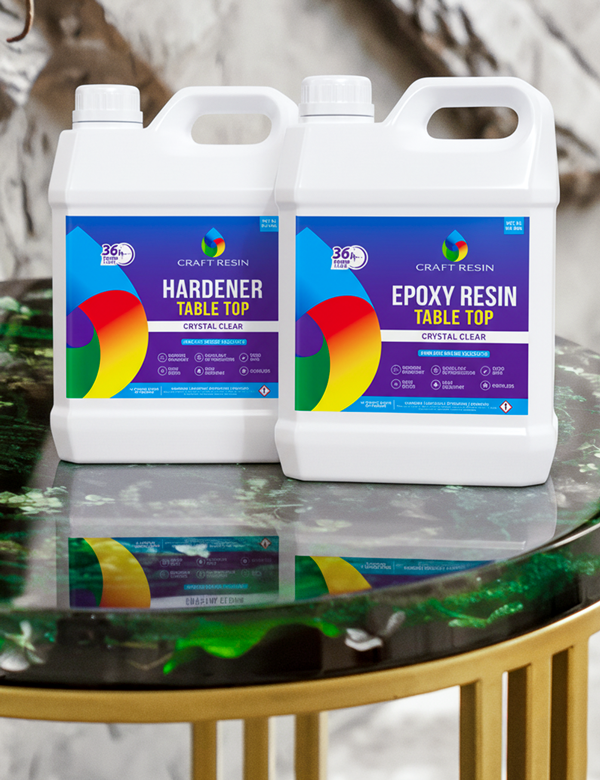

Table Top Epoxy Resin Kit
Table top epoxy resin (also called bar top or countertop epoxy) is a clear, self-leveling coating used to seal and protect surfaces like wooden tables, bar tops, countertops, and butcher blocks. It cures into a hard, high-gloss finish that helps resist moisture, stains, and everyday wear.
It’s made for thin surface coats - typically 3 mm per coat - to create a smooth, glass-like layer for refinishing furniture and indoor kitchen surfaces. Unlike deep pour epoxy, which is formulated for thick castings (like river tables), table top resin is designed for protective topcoats, not deep fills.




1 product

Product specification
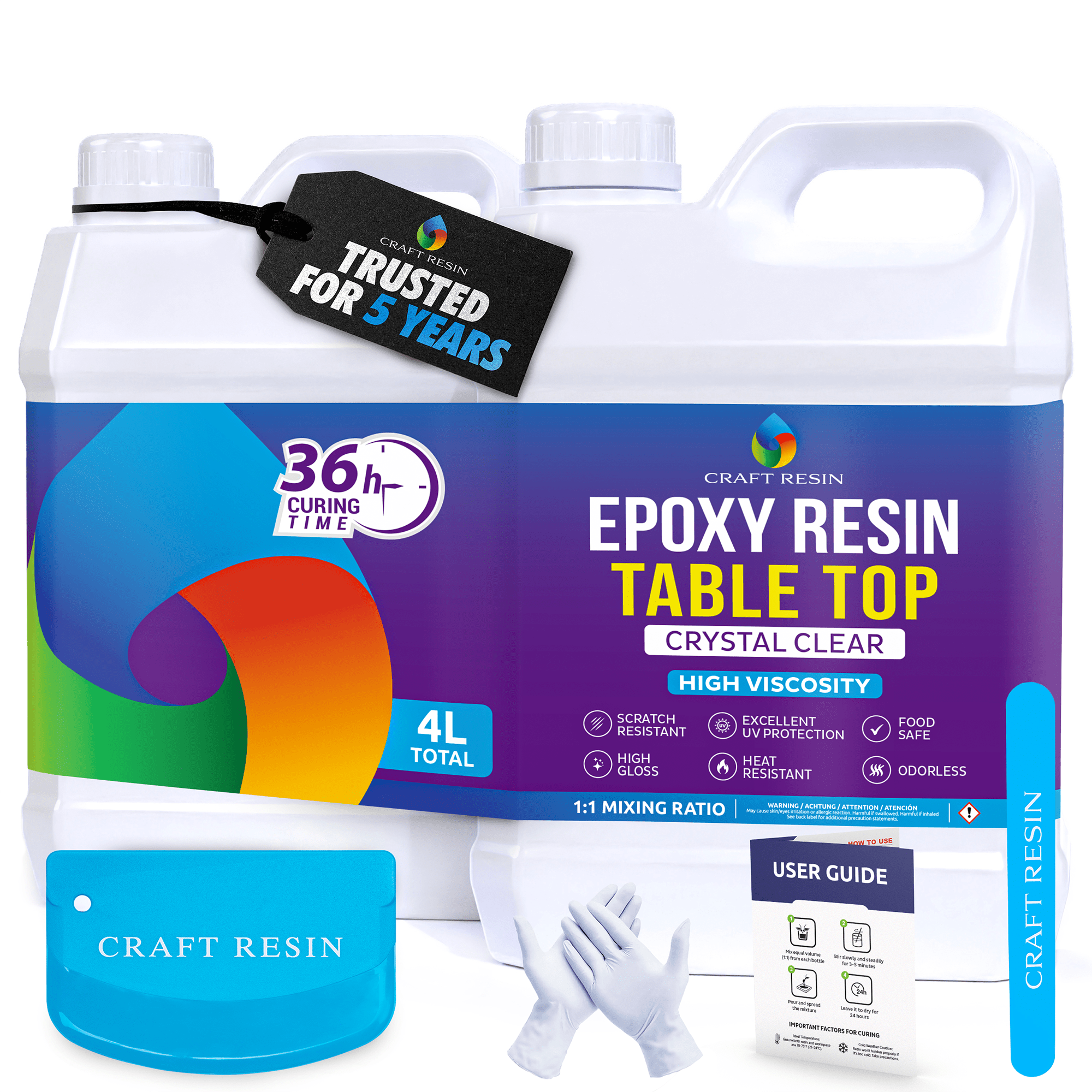
Table top epoxy resin is a clear, self-leveling coating designed to protect and enhance wood surfaces such as tables, countertops, and bar tops. It cures to a glass-like, high-gloss finish that resists moisture and everyday wear.
Craft Resin Table Top Epoxy uses a simple 1:1 mix ratio, making it suitable for beginners and experienced makers alike. The bubble-release formula helps create a smooth, even coat with minimal effort. For best clarity and performance, apply thin layers up to ≈ 3 mm per coat.
Designed for protective surface coatings (not for deep casting).
Use our coverage calculator to determine how much resin you need for your project.
Table Top Epoxy Resin (Coating)
1:1 by volume
Crystal clear, high-gloss
3 mm
30–40 minutes at 25°C (77°F)
24–72 hours
Approx. 3,4 l/m² at 3 mm
21–27°C
Yes, non-yellowing formula
3800 cps
Yes
Low odor, low VOC
Store in a cool, dry place away from sunlight
12 Month
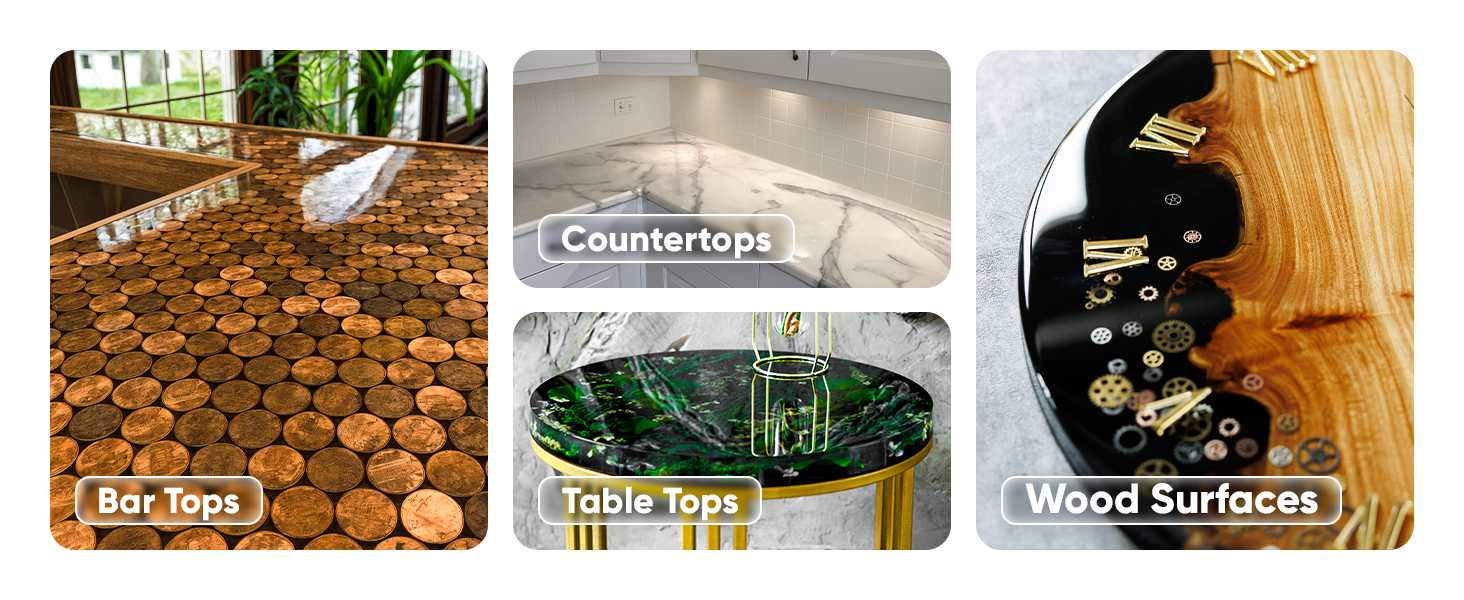
Table Tops, Bar Tops, Countertop Coating, Wood Coating, Furniture Refinishing, Protective Clear Coating, Artwork & Canvas Coating, DIY Crafts And Home Décor Projects
PERFECT EPOXY RESIN FOR COATING
How to Use
Using table top epoxy resin is simple when you follow the right process. Learn how to mix, pour, and apply thin coats correctly to ensure maximum clarity and durability.
Ultimate Guide to Craft Resin Table Top Epoxy Resin
FAQ
What is table top epoxy resin?
Table top epoxy resin is a clear, self-leveling coating made for protective topcoats on tables, bar tops, countertops, and furniture. Craft Resin Table Top Epoxy cures into a hard, high-gloss surface that helps resist moisture, stains, and everyday wear. It’s designed for thin flood coats that form one smooth, continuous “glass-like” film — not deep castings.
How do you mix table top epoxy resin?
Craft Resin Table Top Epoxy mixes 1:1 by volume (equal parts resin and hardener). Measure carefully, then mix thoroughly, scraping the sides and bottom as you go. For best consistency — especially for beginners — use a “double-mix”: mix, pour into a clean cup, then mix again. Accurate measuring and complete mixing help prevent soft spots and tacky areas.
How thick can you pour table top epoxy resin?
Craft Resin Table Top Epoxy should be applied in thin layers, up to ≈3 mm per coat. Applying thin layers ensures optimal clarity, proper curing, and a smooth self-leveling finish without overheating.
How long does table top epoxy take to cure?
At room temperature (21–27°C), Craft Resin has a working time of approximately 30–40 minutes. The surface becomes tack-free within several hours and fully cures within 24–72 hours, depending on environmental conditions.
How do you remove bubbles from table top epoxy?
Craft Resin Table Top Epoxy is formulated to help bubbles release, but technique still matters. Mix without whipping extra air in, pour evenly, then lightly pass a torch or heat gun over the surface to pop microbubbles. Avoid overheating one spot. A thin seal coat on porous wood can reduce bubble “outgassing” and improve the final glass-like finish.
Is Craft Resin Table Top Epoxy food safe?
Craft Resin Table Top Epoxy is food safe when fully cured and used as directed. Once cured, the surface becomes a hard, inert coating suitable for incidental food contact (like serving or prep on a sealed surface). Allow full curing before use, and avoid cutting directly on the epoxy to prevent scratches. Always follow your product instructions for cure and safe handling.
What is the difference between table top and deep pour epoxy?
Table top epoxy is made for thin protective coatings that self-level into a glossy surface — ideal for flood coats on tables and counters. Deep pour epoxy is engineered for thick castings (deep molds, encapsulation, river table pours) where controlled heat and slow curing matter. If your goal is a clear topcoat, choose table top resin. If you’re filling deep volume, choose deep pour.
Why did my epoxy turn yellow?
Yellowing is usually caused by UV exposure, heat, or aging over time. UV-resistant, anti-yellowing formulas help slow the change, but no epoxy stays perfectly clear forever in direct sunlight. To keep your finish clearer longer, limit long-term exposure to strong sun, use window coverings when possible, and avoid placing epoxy-coated surfaces outdoors. Proper curing also supports long-term clarity.
Do you need to seal wood before applying epoxy?
Sealing is strongly recommended on porous or uneven wood. A thin seal coat helps reduce air release from the grain (bubbles) and prevents “dry spots” where resin soaks in unevenly. It also improves wetting so the flood coat can self-level smoothly. Clean thoroughly first — fish eyes and craters often come from silicone, wax, oils, or contaminated cleaners left on the surface.
Can you apply multiple coats of table top epoxy?
Yes. For best results, apply multiple thin coats rather than one thick pour. If you recoat while the first layer is still slightly tacky, the next coat can bond well. If the surface is fully cured, lightly scuff-sand to create adhesion, clean the dust completely, then recoat. Keeping each layer up to ≈ 3 mm helps maintain clarity and control.
How much epoxy resin do I need for my table top?
The amount depends on your surface area and the coat thickness (up to 1/8” / ≈ 3 mm per layer). The most accurate way is to measure your tabletop and use the Resin Calculator to estimate the exact volume for your pour. Add a small extra margin for edges and mixing loss — especially on large surfaces where coverage and leveling matter.
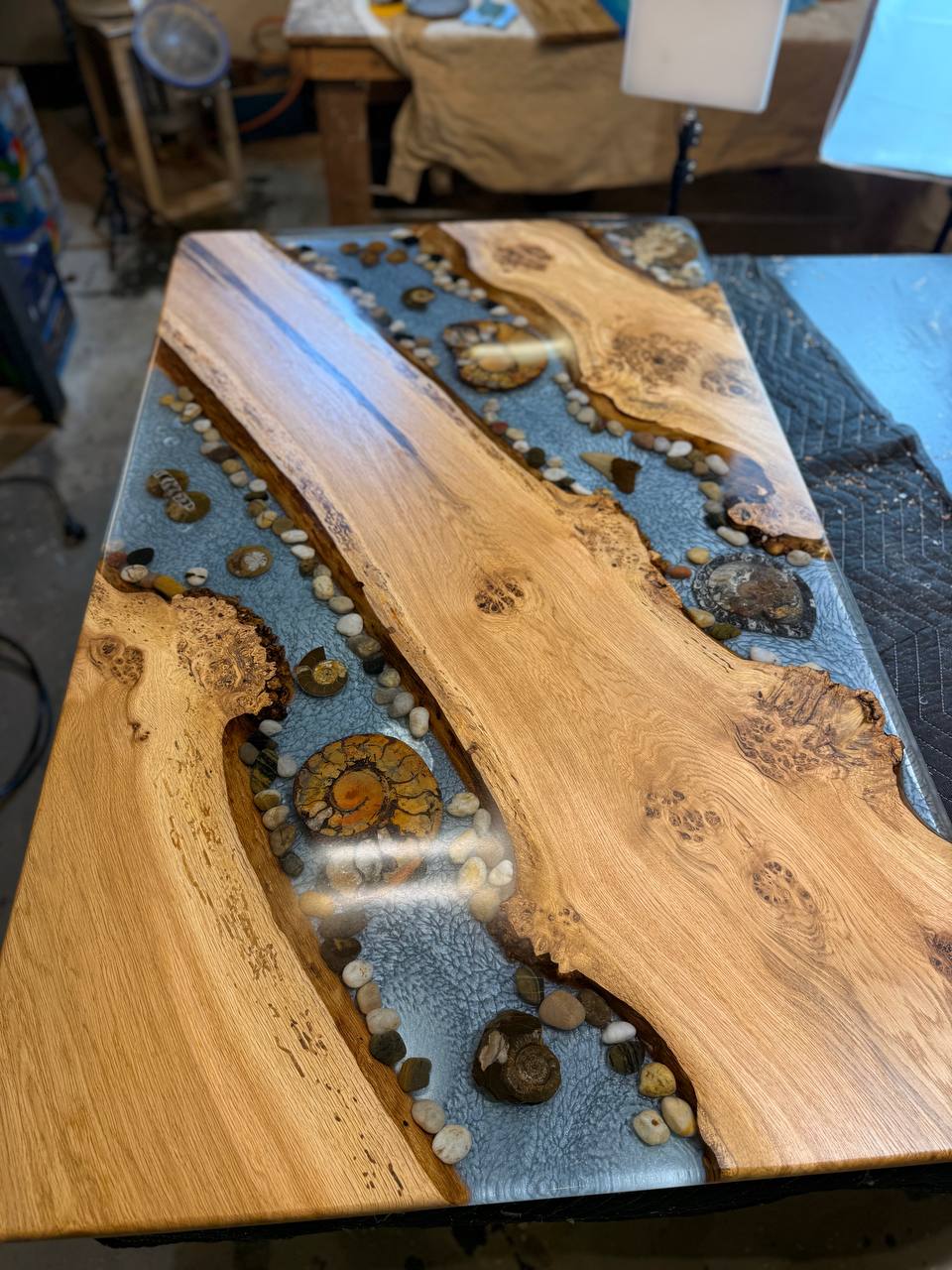
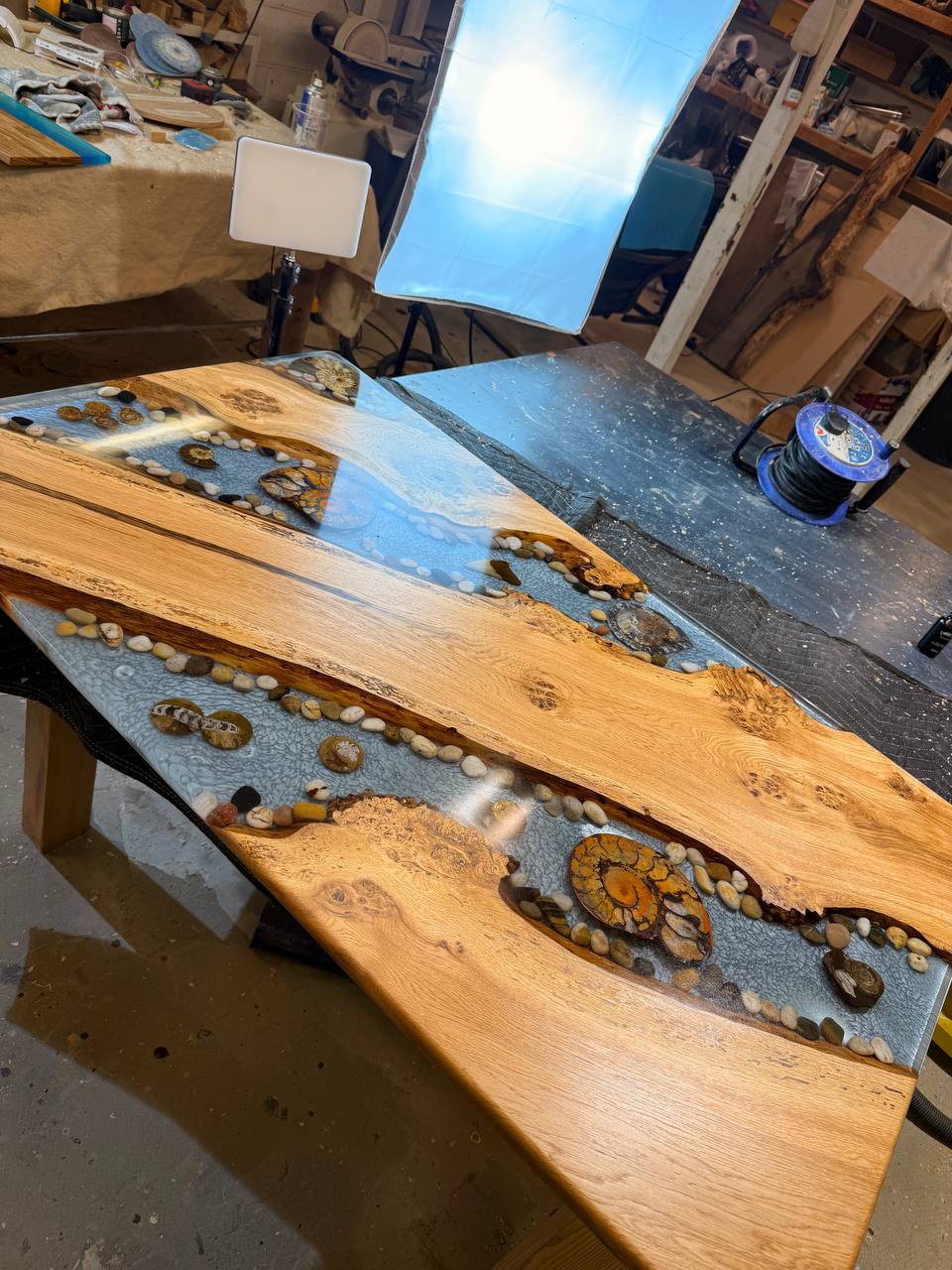
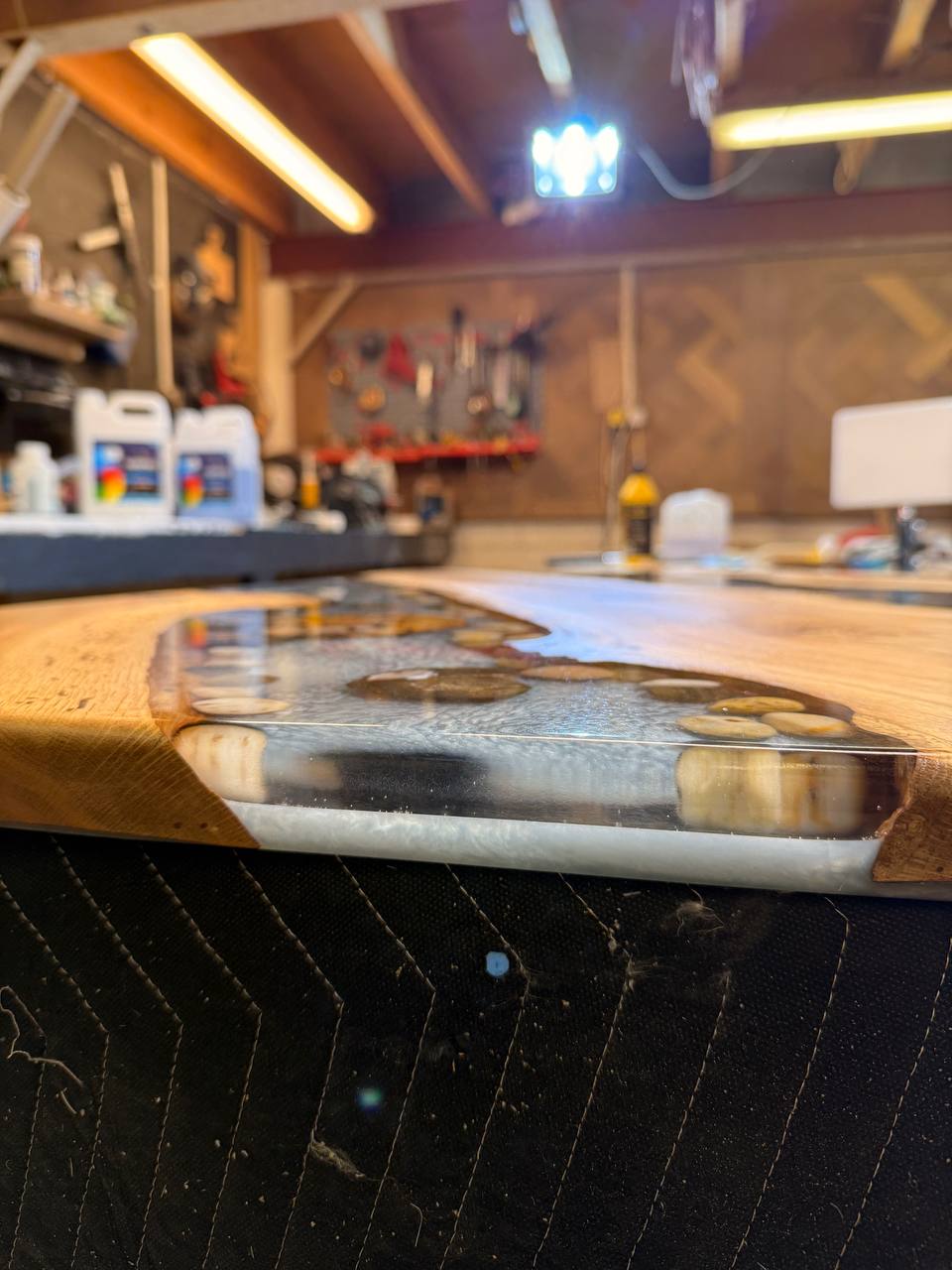
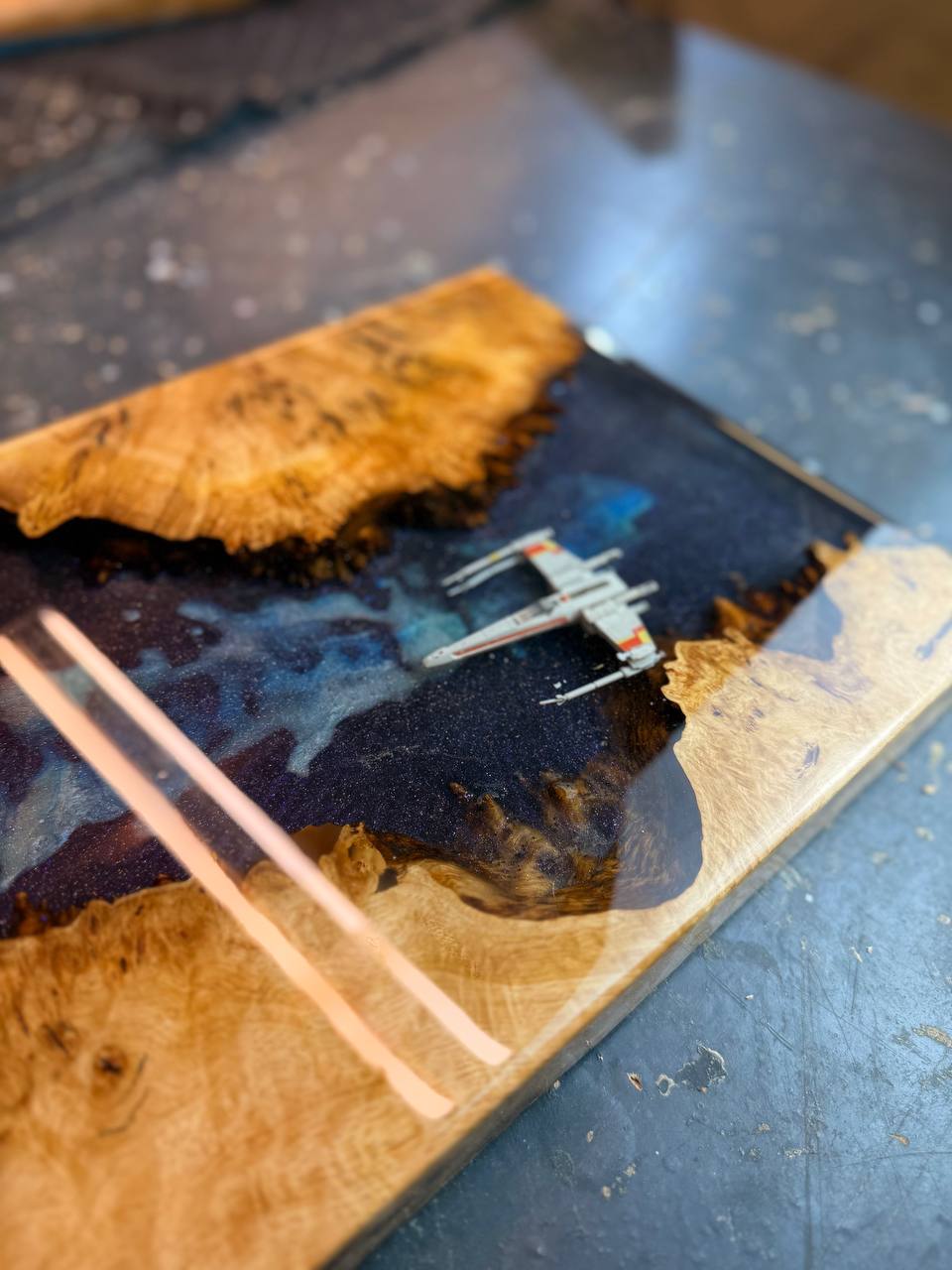
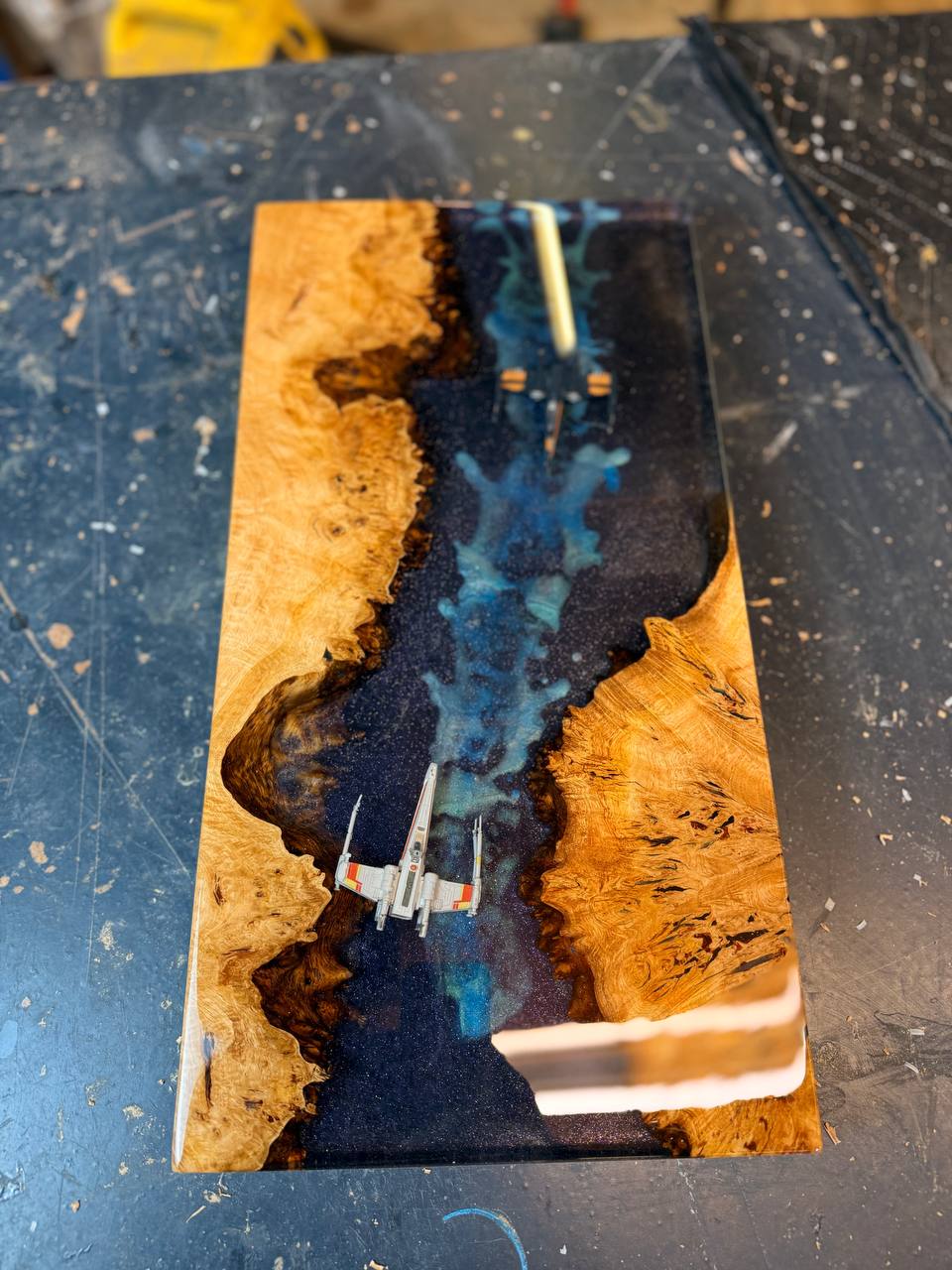
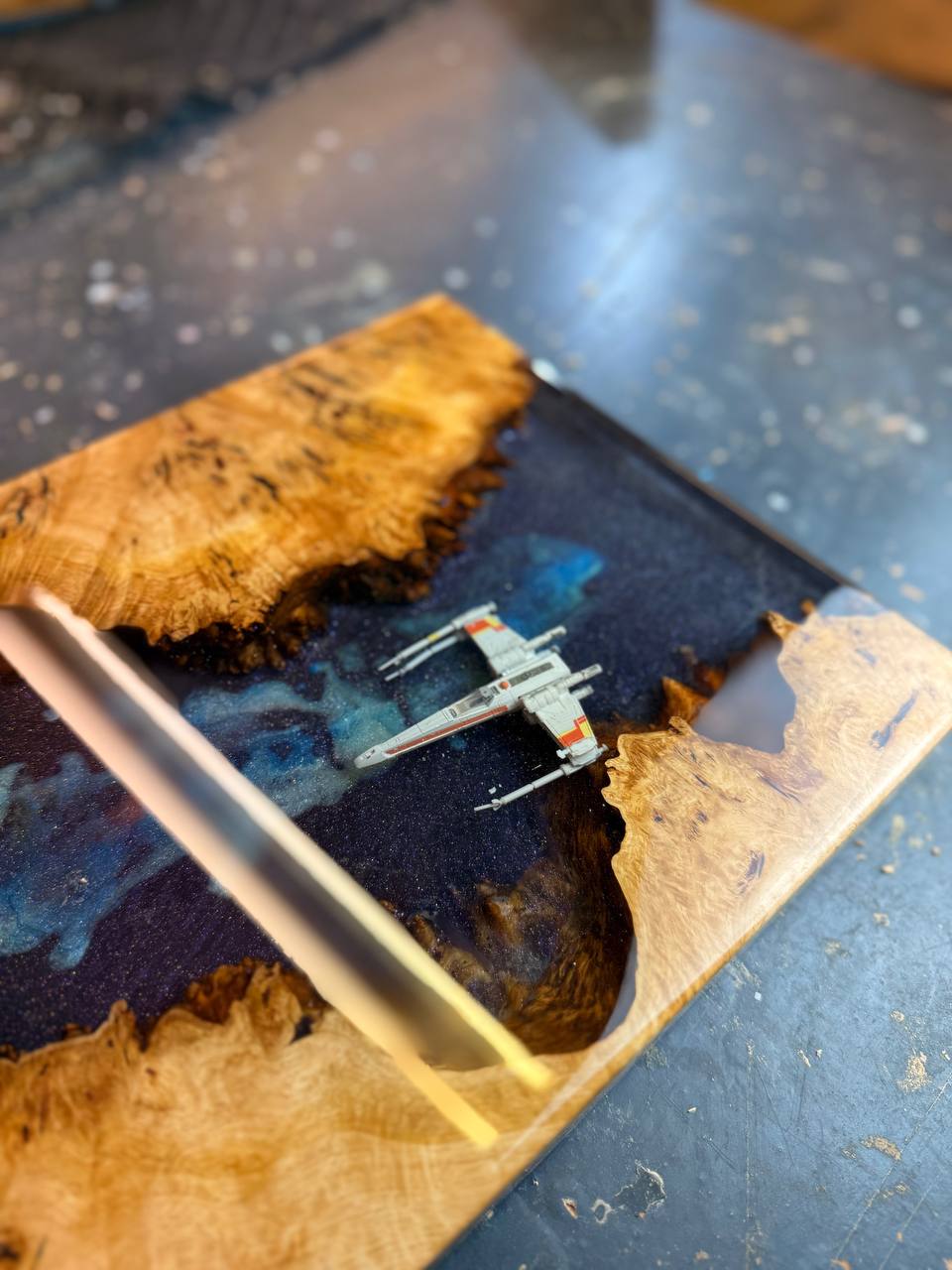
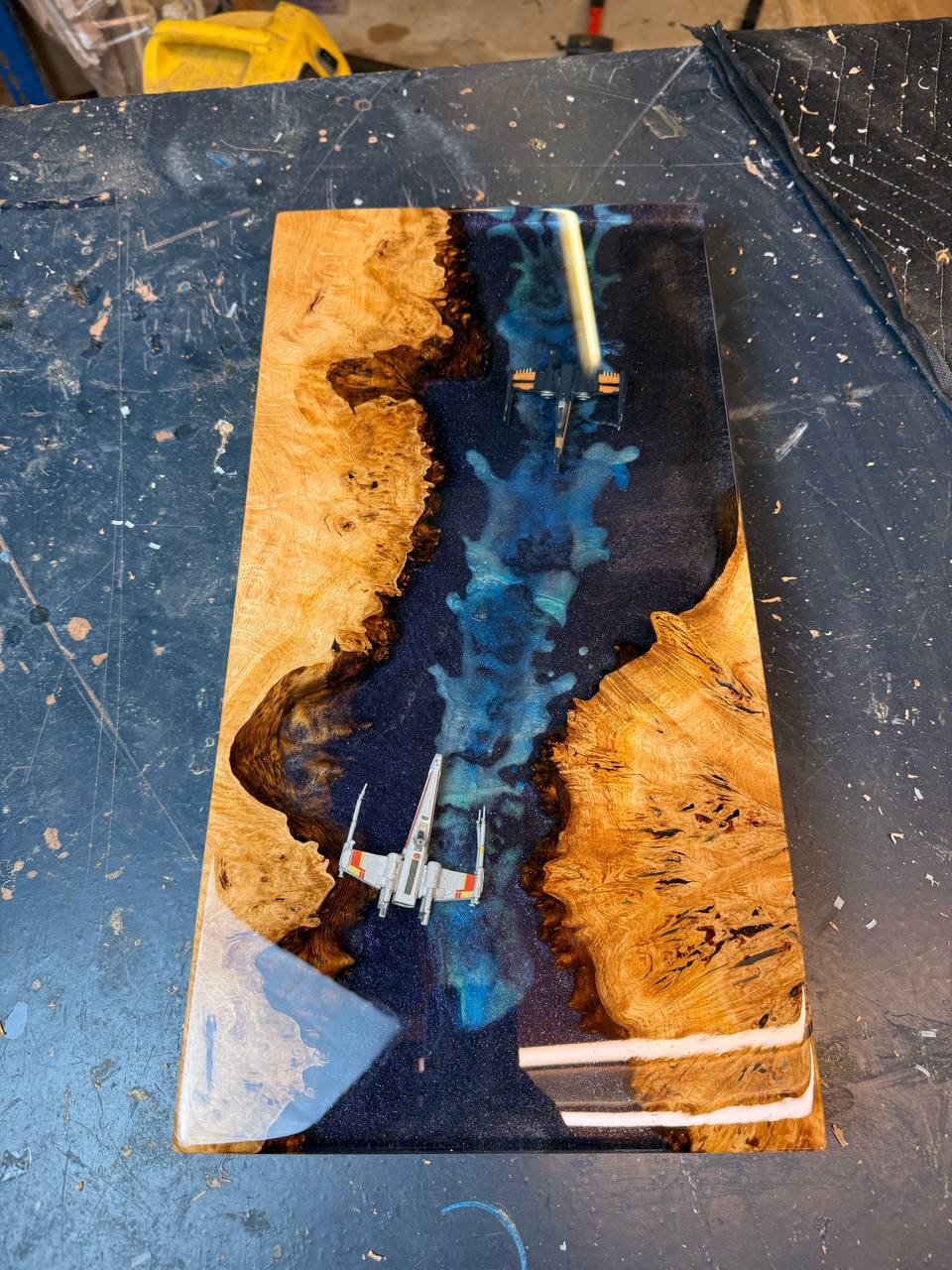
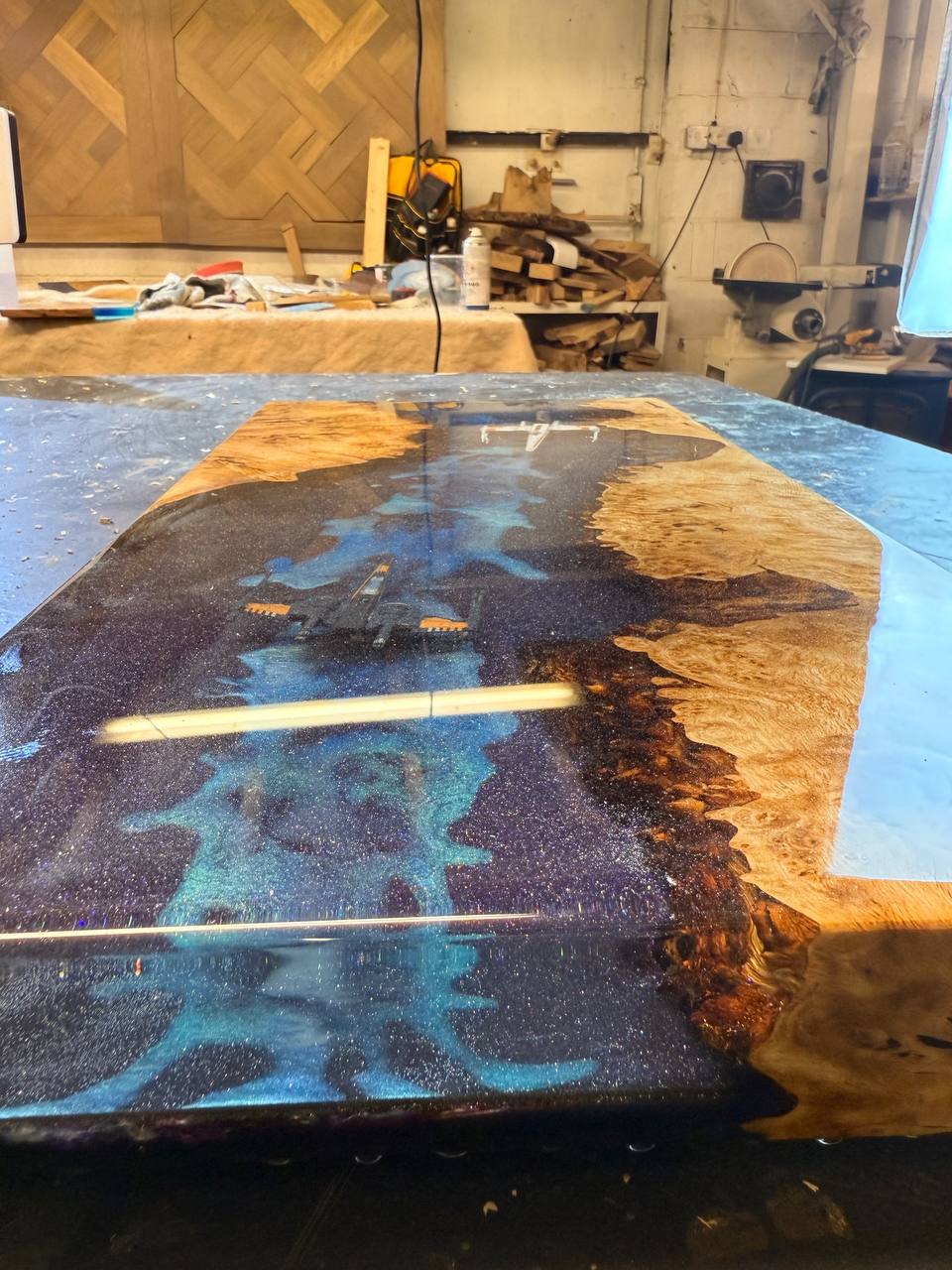
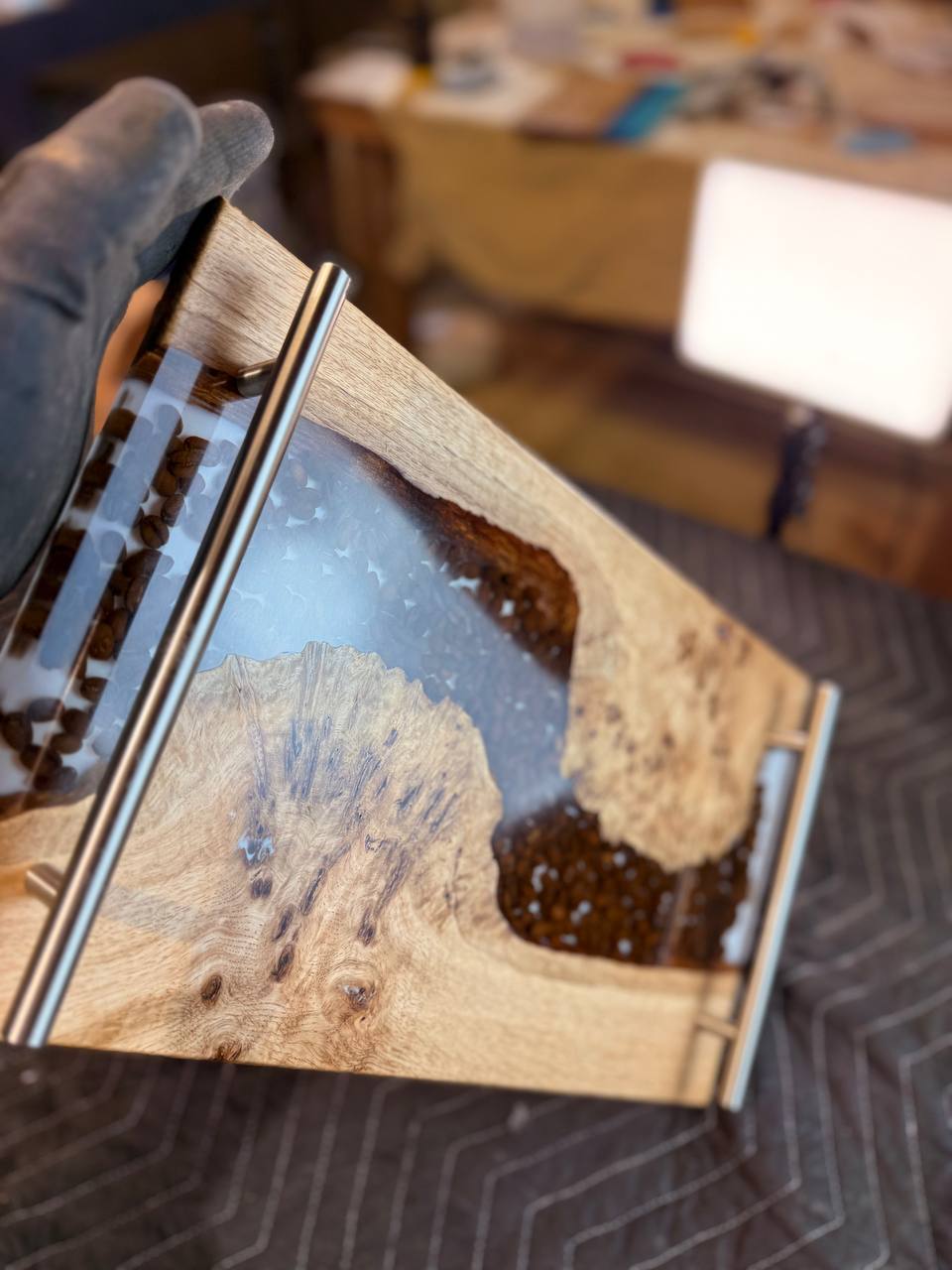
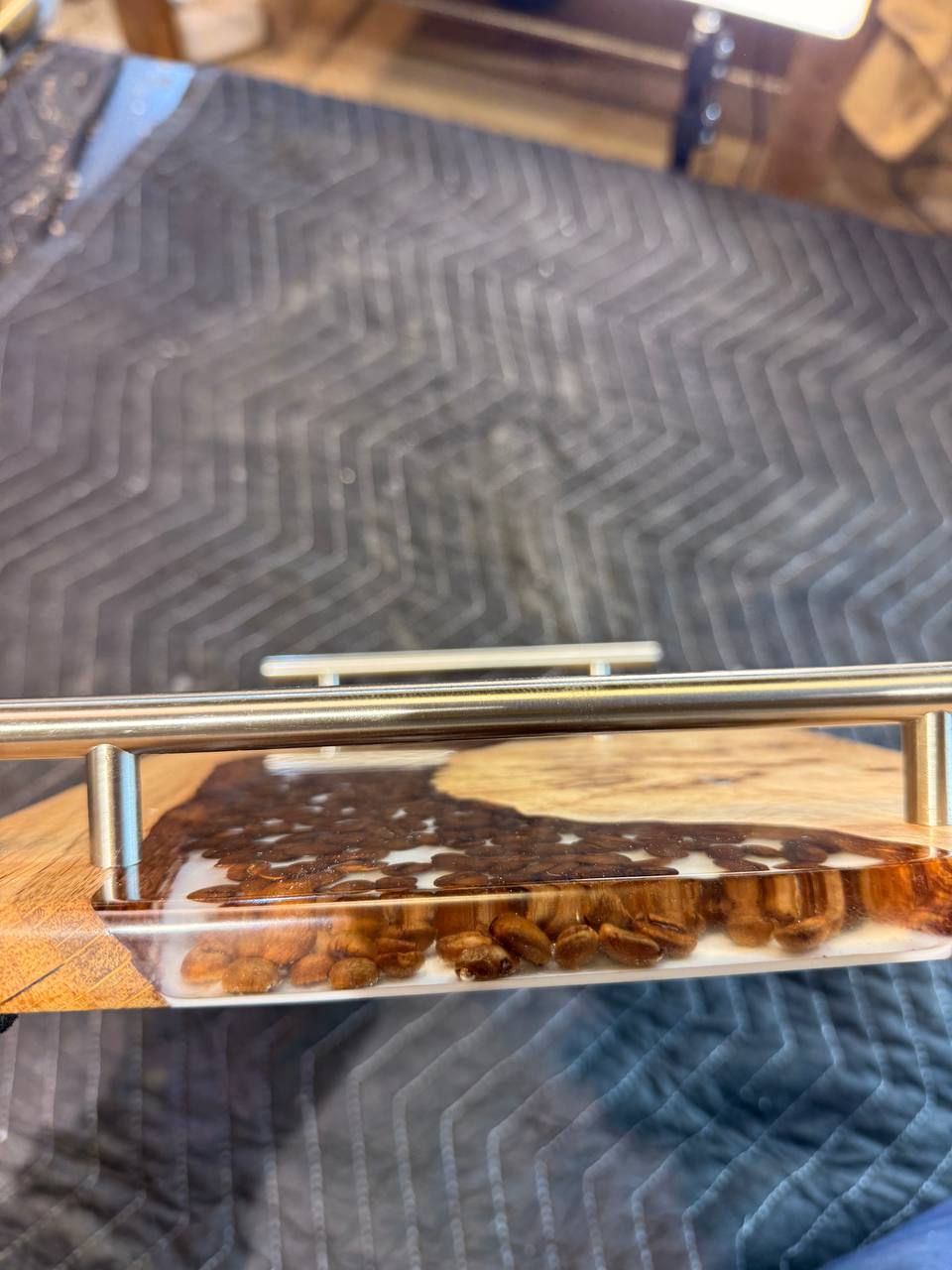
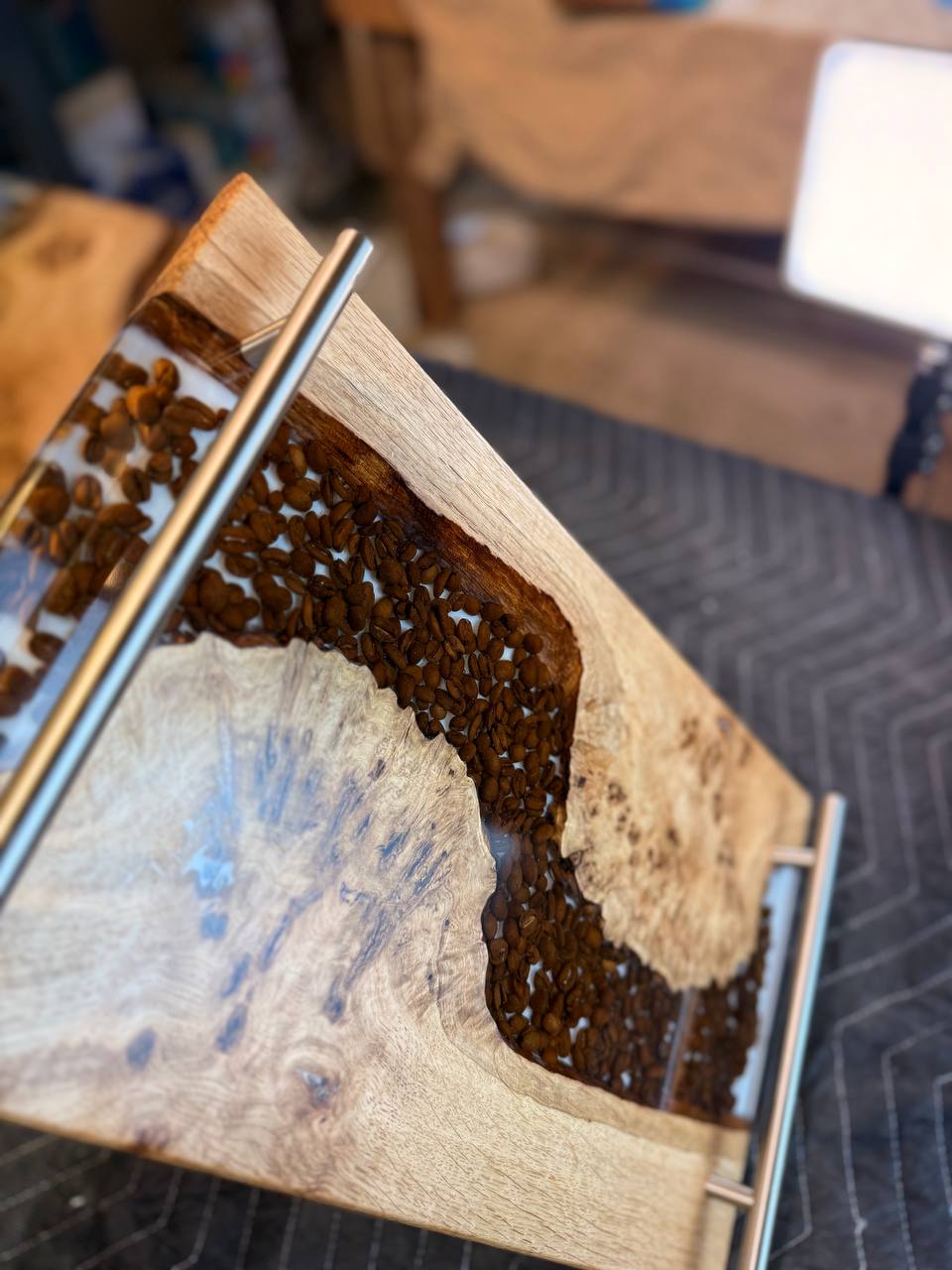
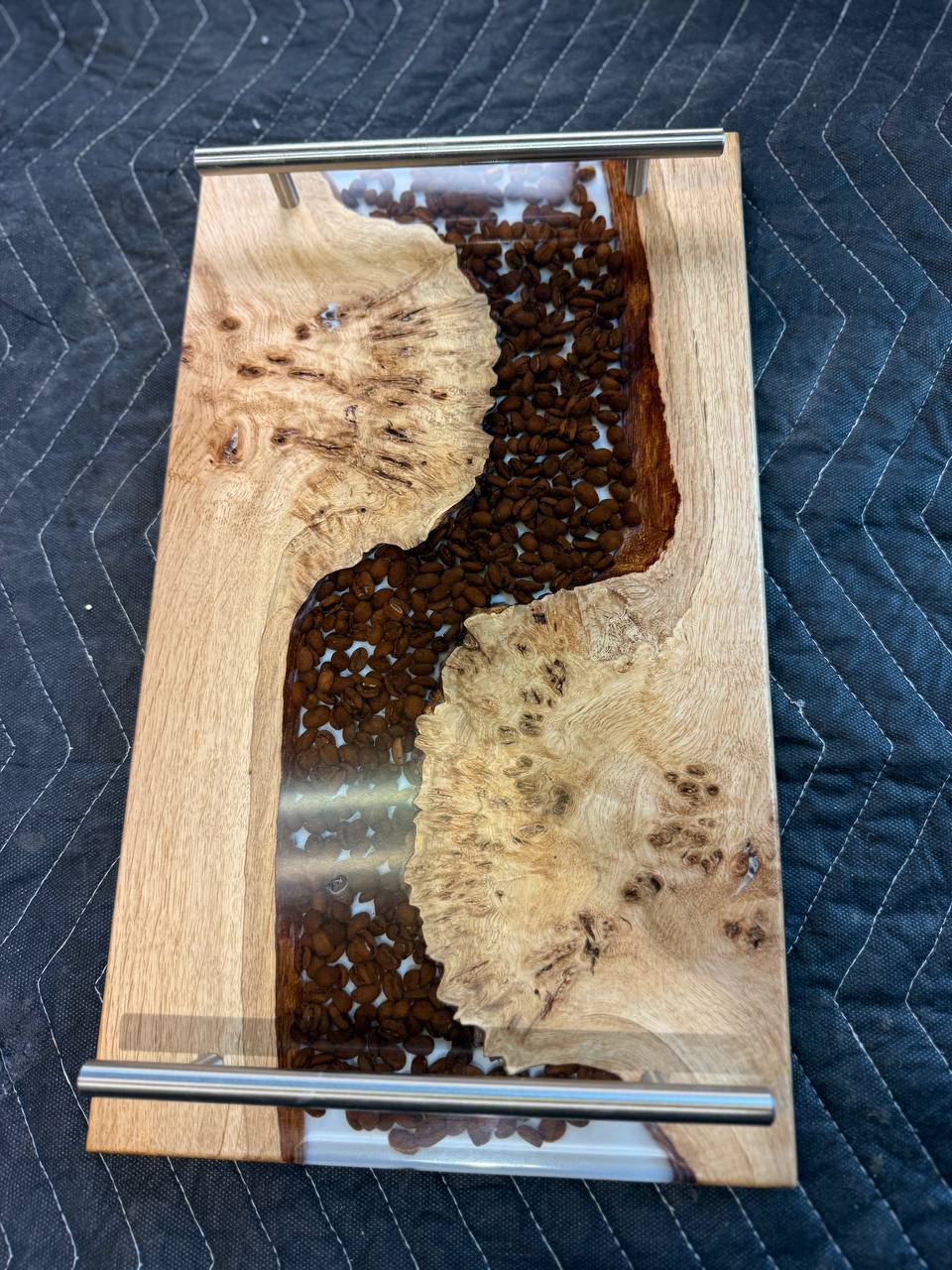
Real customer projects using our Table Top Epoxy Resin
Watch How It Works
